Baldur’s Gate
Baldur’s Gate
General Information
| Stat | Value |
|---|---|
| Region: | Sword Coast |
| Category: | City +1500 |
| Deities of Note: | Gond, Waukeen, Tymora, Umberlee |
| Primary Exports: | Maritime trade goods, mercenary contracts, manufactured goods |
| Threats: | Corruption, organised crime, political unrest, cult activity |
General
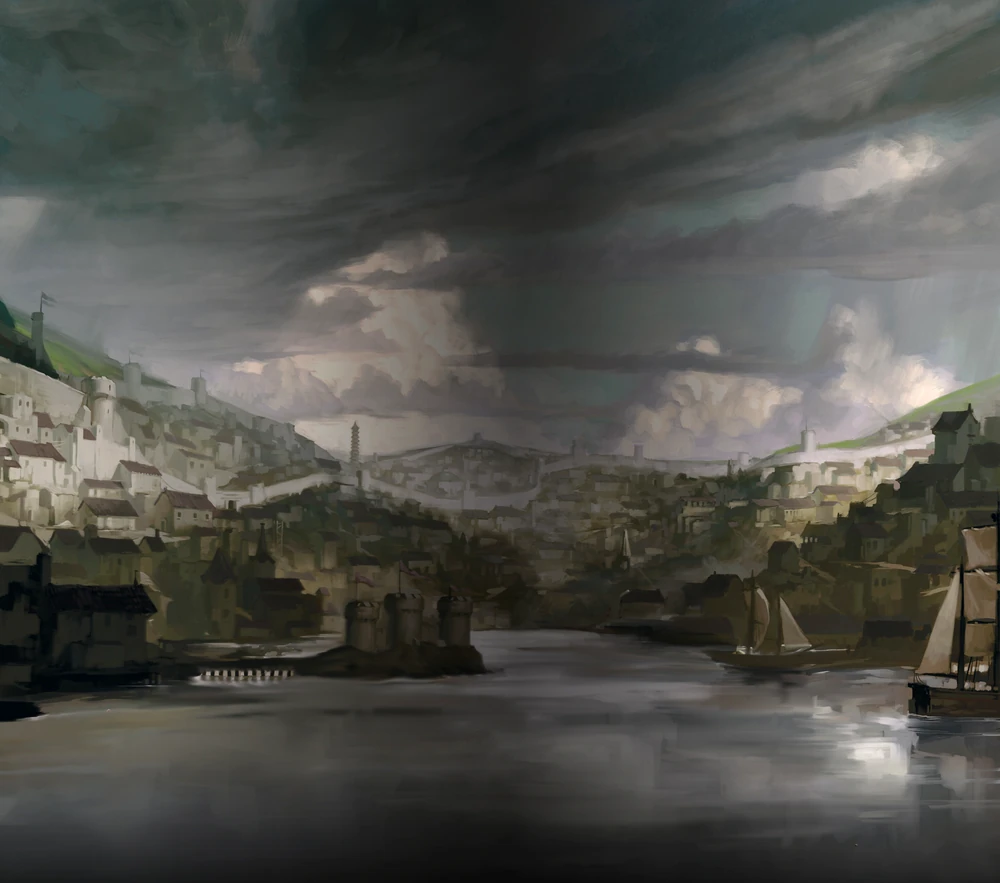
Baldur’s Gate is a sprawling port city along the Sword Coast, situated where the River Chionthar meets the Sea of Swords. Known for ambition, wealth, and ruthless politics, the city serves as a critical trade centre linking inland Faerûn with the western seas.
Unlike the elegance of Waterdeep or the resilience of Neverwinter, Baldur’s Gate is loud, crowded, and fiercely pragmatic.
Geography
The city stands on both sides of the River Chionthar and is protected by high walls and fortified gates.
Nearby landmarks include:
- Wyrm’s Crossing – the bridge-fortress connecting the city districts.
- The Outer City – sprawling settlements beyond the walls.
- The Wide – Baldur’s Gate’s central market district.
- Candlekeep – the famous fortress-library located to the south.
History
Baldur’s Gate grew from a small harbour settlement into one of the most powerful merchant cities on the Sword Coast.
The city weathered piracy, wars, cult uprisings, and political struggles for centuries. During the late 15th century DR, the city faced major instability involving infernal cults and political conspiracies, but survived the crisis and emerged stronger.
By the early 1500s DR, Baldur’s Gate continues to thrive as an influential — if notoriously dangerous — metropolis.
Government
Baldur’s Gate is ruled by the Council of Four, led by the Grand Duke.
The city’s politics are dominated by wealthy patriar families, mercantile interests, military leaders, and political alliances. Corruption and bribery remain common despite official efforts to maintain order.
Defences
The city’s security forces include:
- The Flaming Fist – a powerful mercenary army serving as the city guard.
- The Watch – civic law enforcement within the city walls.
- Harbour fortifications and river defences guarding trade routes.
Society
Baldur’s Gate is a city of opportunity and danger. Wealthy patriars live in luxury while labourers, sailors, refugees, and criminals crowd the lower districts.
Citizens tend to value practicality, ambition, and survival above idealism. Adventurers are common, and many fortunes are won, or lost, within the city’s walls.
Religion
The city hosts temples to many deities, including:
- Gond – god of craft and invention.
- Tymora – goddess of luck.
- Waukeen – goddess of trade.
- Ilmater – god of endurance.
- Umberlee – feared goddess of the sea.
Trade & Craftsmanship
Baldur’s Gate profits enormously from river and sea trade. Its docks handle goods travelling between inland Faerûn and the Sword Coast.
The city is known for:
- Maritime trade
- Mercenary companies
- Metalworking
- Brewing and food production
- Caravan commerce
Districts
The city is broadly divided into:
- Upper City – wealthy patriars and noble estates.
- Lower City – merchants, craftsmen, and crowded housing.
- Outer City – settlements outside the walls.
- Wyrm’s Crossing – fortified bridge district.
Factions & Organizations
- The Flaming Fist
- The Guild – criminal network controlling much of the underworld.
- The Harpers
- The Zhentarim
- The Lords' Alliance
Symbol
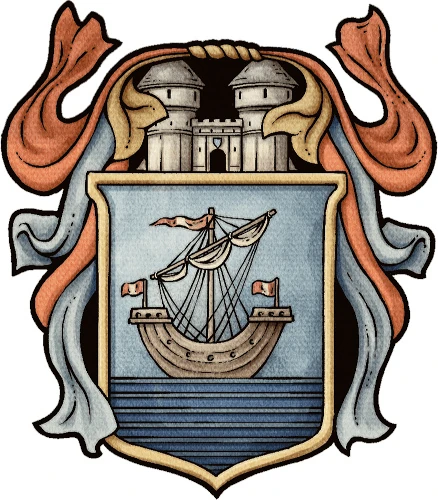
Baldur’s Gate’s heraldry commonly depicts a city gate and anchor, symbolising commerce, maritime power, and opportunity.
Travel
Based on 8 hrs walking per day with Exhaustion Level 0
| Destination | Travel Days |
|---|---|
| 🕓: | |
| 🕓: |
Quests
| File | Status | Date Obtained |
|---|
NPCs
| File | Race | Gender | Role |
|---|